

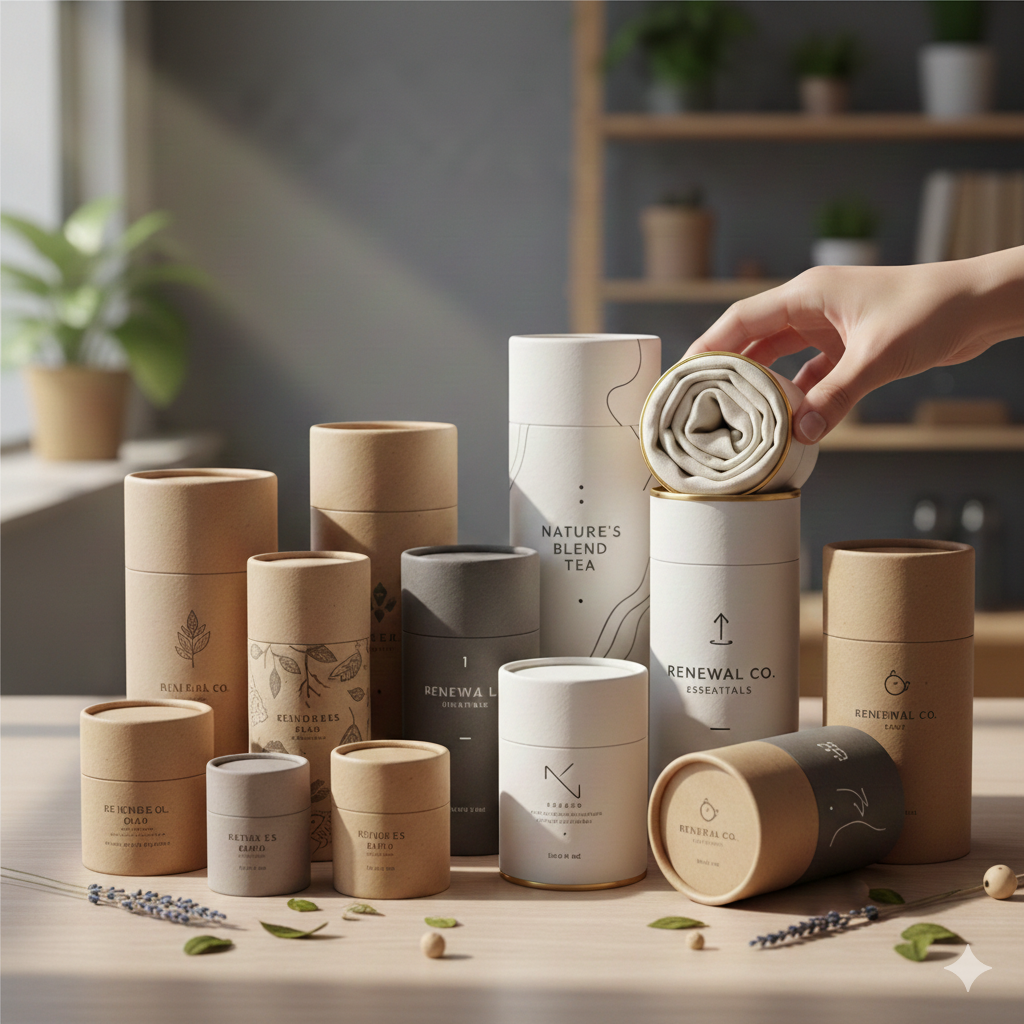
In 2026, the choices made when packaging are far more than mere product wrapping. The brands are currently considering packaging in terms of sustainability, shipping performance, customer experience, and brand perception. This discussion is dominated by two trendy competitors, including tube packaging and conventional boxes. Although these two possess their advantages, evolving consumer expectations as well as logistics requirements are redefining the mode of operation of each that really creates a long-term value. We shall see the comparison and contrast of these two types of packaging and which one to win in 2026.
What are Tubes and Traditional Boxes?
The conventional boxes, usually rectangular or square, have been widely used in retail and shipping. They are made of cardboard, corrugated stock, or rigid board and are universal, stackable, and can be even personalized.
On the other hand, tube packaging has a cylindrical shape, typically made out of thick paperboard or kraft. Each poster or document has become a high-end packaging option for cosmetics, candles, food, clothing and luxury products.
Durability and Product Protection.
Tube packaging shows great strength. Its cylindrical form spreads pressure in every direction which means that it can be subject to crushing, bending and damage of corners during transit without much problem. This is particularly advantageous to delicate or long objects.
Traditional boxes are based upon reinforced edges and interior inserts as sources of protection. They are more susceptible to stacking pressure and corner impact, though they are more effective. Cardboard Tube Packaging in many cases lower the rate of damage and returns when the product shipped by a brand has a high value or fragile nature.
Shipping Efficacy and Cost Effectiveness.
Shipping is also a significant issue of concern to brands in 2026. Traditional boxes are predictable in terms of palletization and stacking and this is best with bulk deliveries. Nonetheless, they tend to have more need of void fillers, which would escalate the consumption of material and weight during shipping.
Tube packaging will reduce the necessity of the additional padding since it is rigid in nature. Tubes might slightly increase the space in some shipping designs, but due to their lower damage potential and reduced filler, logistics costs can often be offset. Tubes are also becoming cost-effective in the long run to e-commerce brands that are concerned about safe delivery.
Environmental Responsibility and Sustainability.
The old boxes (particularly the over-sized ones and the ones filled with fillers) can introduce unnecessary wastes. However, compared to this, product-fitting tubes facilitate the reduction of waste and meet the objectives of the circular economy. Since green box buying is ever-growing in 2026, a package that is visibly waste-reduced is one that gains customer confidence.
Branding and Unboxing Experience.
Unboxing has turned out to be an effective marketing experience. Traditional boxes have vast flat printing areas with logos, patterns, and messages which are great for bold branding and creating stories.
The Tube packaging, in turn, provides a unique and high-quality unboxing experience. The twist off or pull open unveil creates enthusiasm and is deliberate. Its distinctive design makes its brand stand out instantly compared to other competitors who use conventional boxes. Ecofriendly Tube Packaging have more emotional appeal to premium, gift ready or lifestyle products.
Flexibility and Suitability of Products.
When packing bulky, multi-item or irregularly-shaped products traditional boxes remain the norm. They are packaged in modular sizes and are suitable in the retail shelves and storage in warehouses.
However, the streamlined products that do well with tube packaging include candles, skincare, gourmet foods, posters, fabrics and hand-picked gift items. With brands specializing in edited lines of product and aiming to be higher in position, tubes are being used more in industries than any previous year.
Which Packaging Solution Leads the Market in 2026?
The excellent durability and sustainability benefits high end attractiveness and less dependence on filler material. However, it shows to be a clear victor in terms of contemporary experience based brands.
There is still the need for traditional boxes in large-scale retail which is highly sensitive in cost shipments, and intricate goods assortments. The cleverest brands in 2026 will not be deciding on that one universally but will choose a packaging format that best suits the requirements of the product and customer demands, as well as brand image.
Tube packaging is the future of brands interested in protection, sustainability and high-end presentation; however, traditional boxes will still be useful due to their capacity of high volume and flexibility. Thoughtful packaging strategy, in which the form meets the function and future-centered design unite to enhance the brand experience, is believed to be the actual winner.